
When I first started writing these reflections, one motivation was my frustration with how I saw Dr. Martin Luther King, Jr. Day being observed (or rather, not observed) and trying to find a way to bring more gravity to the day in my own life. Now, twenty years later, I am still writing each year to ground myself in the values of the Civil Rights Movement with the resolve to continue to contribute to the ongoing work today. And I am less concerned about how individuals mark Martin Luther King, Jr. Day and more concerned with how we honor the legacy of the Civil Rights Movement every day.
I sometimes use a training activity to introduce the concept of implicit bias using bumper stickers. I show rotating images of different kinds of bumper stickers – from political to religious to silly. I ask people to pay attention to their reactions as the bumper stickers scroll – any feelings, thoughts, images that come to mind. We debrief the activity by talking about the associations and assumptions we make, which usually generates good discussion.
One of the bumper stickers I often include is an image of Dr. King with his hands up, being arrested. Next to the image are the words “Hands Up, Don’t Shoot. Black Lives Matter.” I’ve done this activity with folks in different parts of Colorado and the rest of the country. And often there is one person in the group that will mention that particular bumper sticker as one that stood out to them because they were offended by the use of Dr. King’s image with Black Lives Matter. Often the refrain is something along the lines of “that’s not what King stood for.” My experience has been that the person saying this is always white. While earnest in their reaction, I’ve been struck by the pattern. And the danger in what their reaction belies.
It is a danger we see every year at this time as people mark Dr. King’s birthday with quotes and platitudes devoid of the original context and molded to fit each individual’s worldview. The idea that King’s legacy is not inextricably linked to the current day fight to dismantle systemic racism feels outrageous, and yet, there it is. As we get further away from King’s life, we must protect against the ways his legacy is being perversely used to maintain the status quo.
Dr. King is not a mirror where we can see whatever version of him we want reflected back. His legacy is not a cloak we can put on as comfort against the painful realities of our current struggle. We cannot look away from that pain and struggle.
We cannot forget that when Dr. King was alive, and at the time of his murder, he was not universally loved. During Dr. King’s time, a majority of people in the United States had a negative opinion of him and did not believe he was helping the Civil Rights cause. And after his death, a third of people in the U.S. even said he brought his assassination on himself. And, of course, The Civil Rights Movement was a protest movement, not universally supported or understood.
Contrast that with the prolific use of his quotes and imagery and references to him today, not just on this holiday, but throughout the year, most regularly as a political tool and weapon. As time moves on, King’s legacy is often presented as if he spoke, shared a dream and everyone collectively said “Oh yeah, definitely, let’s do that.”
Some of this is cynical political machinations; for others it is a sincerely held, misinformed understanding of King and the Civil Rights Movement (often informed by the cynical political machinations). And it matters, especially in our current reality.
We are living in a time where the false flag of Critical Race Theory is being used to stop the teaching of our nation’s history and promote not only an adulterated version of Dr. King but of the country’s history of systemic racism. We are living during a time when voting rights are being attacked and dismantled, threatening our democracy. We are living in a pandemic that continues to lay bare the systemic inequities of racism and classism. We are living in a society where the majority of our youth attend segregated schools and opportunity is predicted by zip code. All of these are part of the mechanisms to maintain the status quo of systemic racism.
I hope that this Dr. Martin Luther King, Jr. Day, we will root ourselves in Dr. King’s legacy of disrupting the status quo and reject the current distorted use of his life’s work.
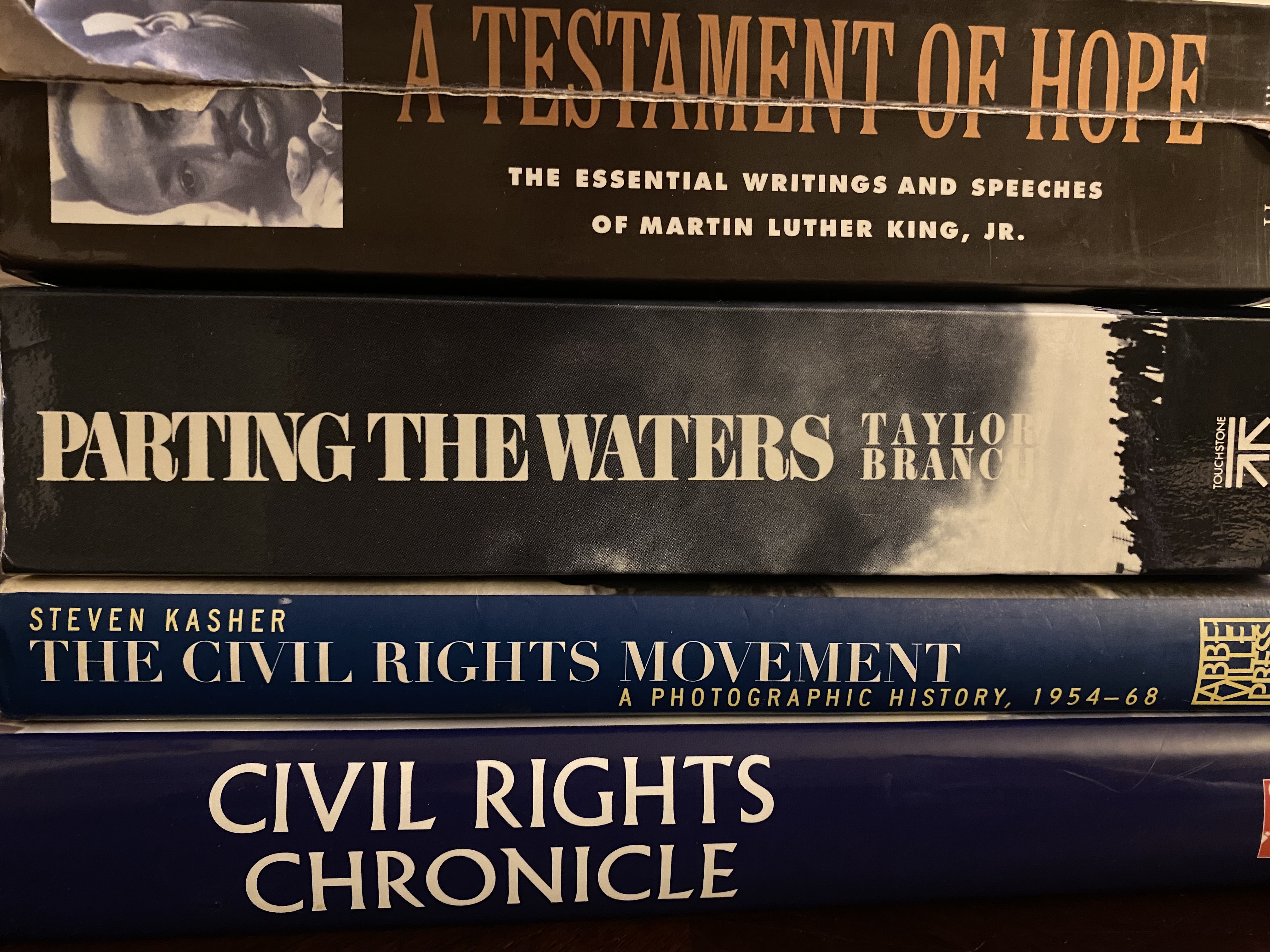
In 2003 I wrote, “MLK Jr. was a pretty prolific writer and orator during his short life and he has much to say that is relevant to the world we face today: issues not just of racism but equity, socio-economics and war. Unfortunately, years after King’s assassination, concerns of civil liberties and freedom, racism and prejudice, fear and strife are very relevant in our lives.” Well, it’s now been fifty-three years since his assassination and the sentiment remains true. I hope that we’ll go back to the source- not just quotes and memes- but King’s speeches, sermons and writings.
In them, we will find not a mirror but a clear picture of a movement for equity and civil rights that continues its fight today.
One final note:
Speaking of the fight today, Dr. King’s family has called on us to take action on voting rights, urging people to “call on Congress to enact changes to elections law nationwide, rather than honoring Dr. King with celebrations on the federal holiday that marks his birthday.” Contact your United States Senators and encourage them to support The Freedom to Vote: John R. Lewis Act when it comes up for a vote. You can learn more about how to advocate for this important right:
https://action.aclu.org/send-message/congress-protect-our-voting-right
 bethreflects